License Key Verification
Validate a license key with the application key and card code. A stable device hash can be provided so the server can associate a license with the current installation and apply the configured device policy.
// Uses AES-256-GCM authenticated encryption for API responses.
Provides multilingual client examples and a straightforward integration path for software license verification.
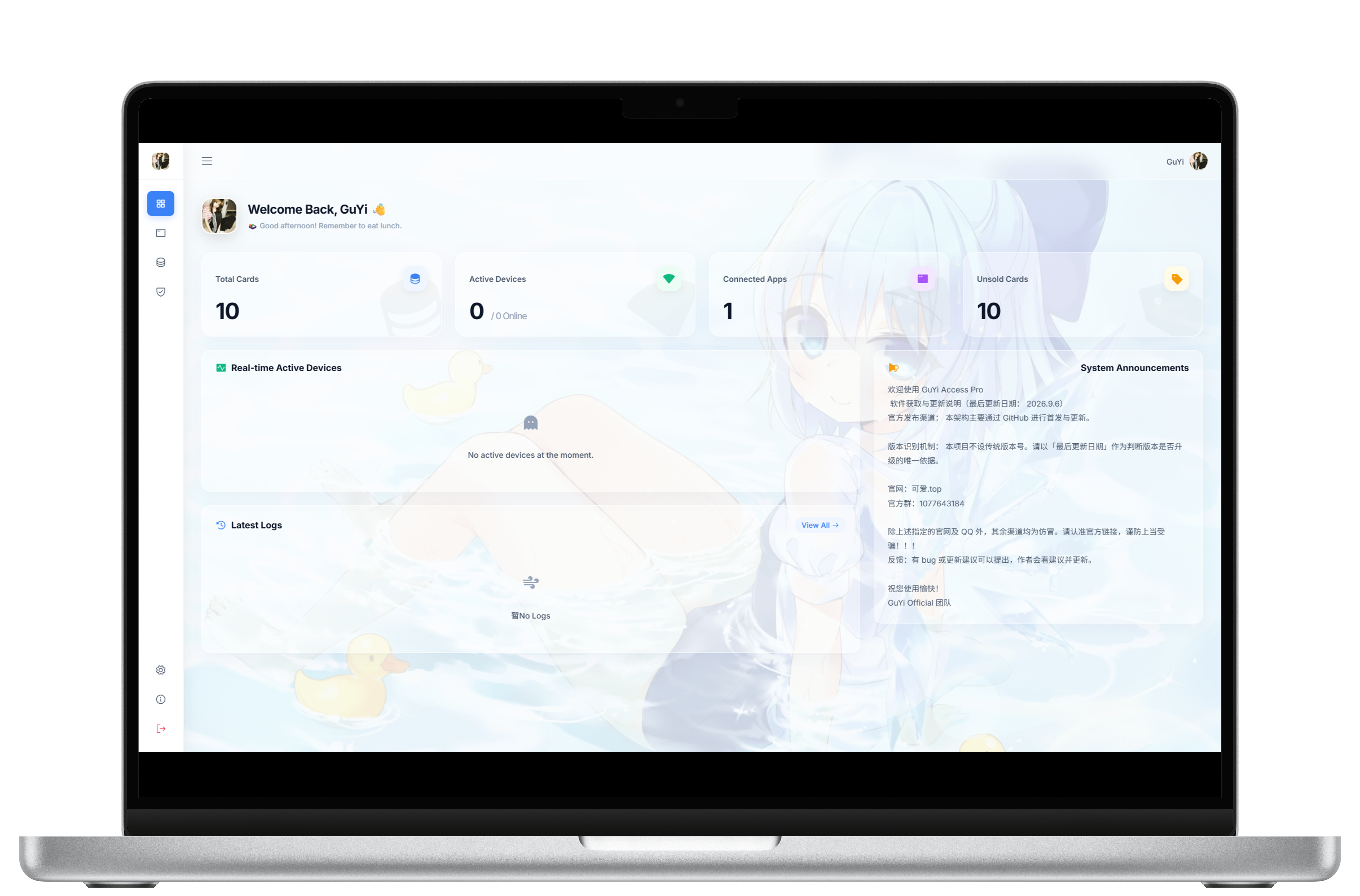
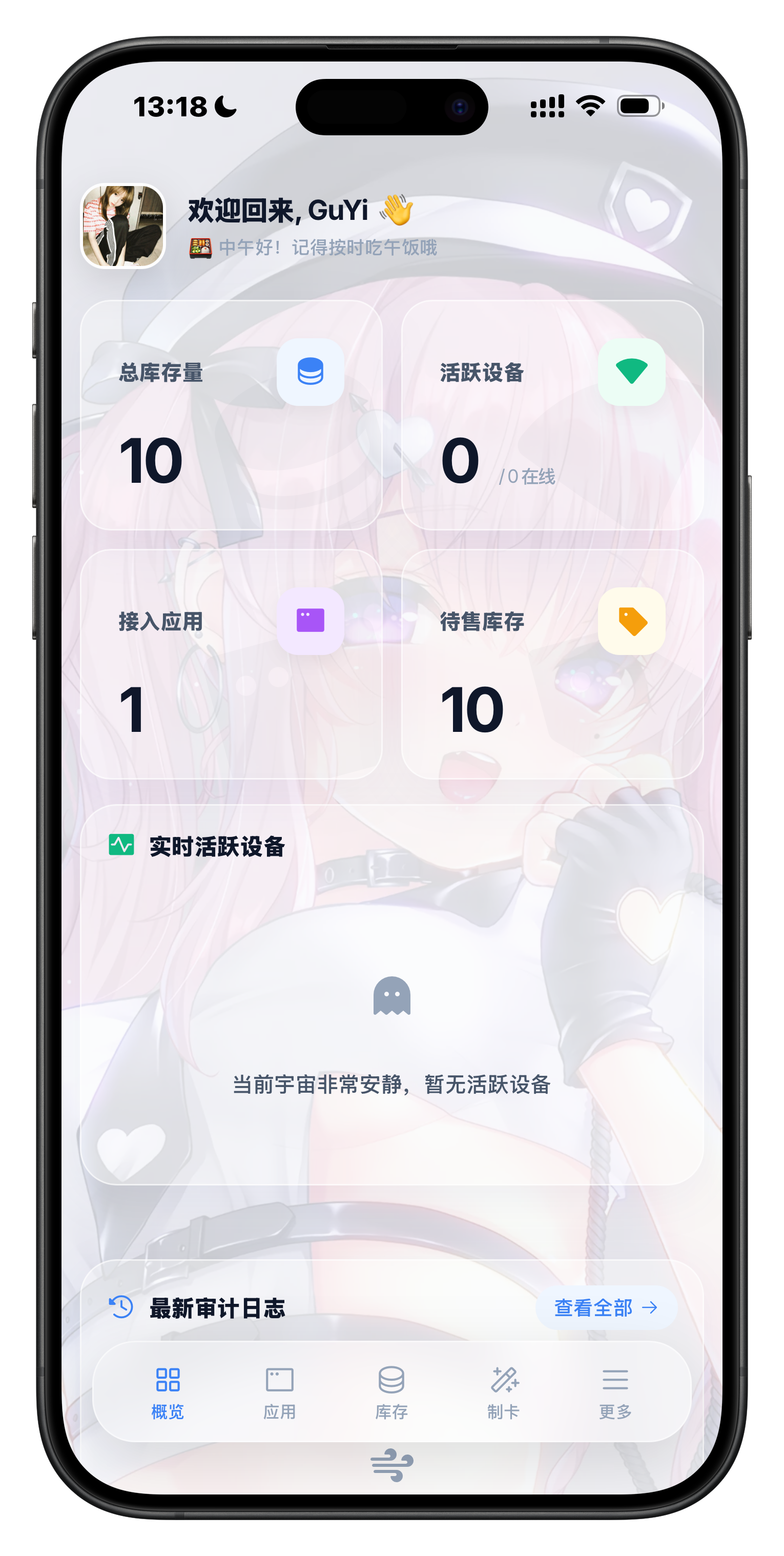
GuYi Access is an open-source software licensing project that connects applications to a centralized license-verification service. The project includes a PHP backend, a JSON API, and client-side integration examples. Deploy the backend on your own web server, then configure each client to use the API endpoint supplied by that deployment.
Validate a license key with the application key and card code. A stable device hash can be provided so the server can associate a license with the current installation and apply the configured device policy.
Keep track of the device associated with a license. Repeated verification from the same device refreshes its activity record, while the documented self-service unbinding action lets a user move a license to another device under the server's rules.
Return application update information and public cloud variables through the API. The developer documentation also describes an administrative API for automated license-key distribution.
The current integration guide explains the encrypted response format, key handling, decryption steps, JSON response envelope, and common error codes so clients can process verification results consistently.
The documentation includes client examples for Python, JavaScript / Node.js, PHP, C#, Go, Java, C++, and Rust. Each example demonstrates how to send the verification request, handle the API response, and decrypt AES-256-GCM data where applicable. Review the GuYi Access developer documentation for request parameters, deployment requirements, security notes, and response codes.
Deployment baseline: the published guide lists PHP 7.2 or later with the PDO and JSON extensions, plus MySQL 5.6 or later. The API runs on your own deployment; the project website is a documentation and download entry point, not a universal API endpoint.